


Bitcoin is approaching another important test as traders weigh improving expectations for monetary policy against the possibility that inflation will remain stubbornly high. The latest recovery has brought buyers back into the market, but confidence remains vulnerable to economic data that could change interest rate expectations.
Top Regulated Brokers
The scenario is familiar: Bitcoin can benefit when investors anticipate easier financial conditions, yet those expectations can reverse quickly when inflation surprises to the upside. Recent comments from Federal Reserve officials have offered some reassurance, although policymakers have not ruled out further tightening this year.
With the September US Consumer Price Index (CPI) report due today, the market faces a question that extends beyond technical analysis. Can BTC/USD maintain its recovery while macroeconomic uncertainty remains elevated, or does the recent rebound still depend on conditions that could change with a single economic release?
Bitcoin Faces a CPI Test as Rate-Hike Concerns Return
Bitcoin climbed as high as $84,000 during the early Asian trading hours on Wednesday, gaining about 4.65% from its weekly low of $80,300, reached mid last week.
This move came after New York Federal Reserve President John Williams said he saw no need for additional rate increases in 2027 under his current economic outlook. His remarks helped ease the pressure on the dollar and supported a broader recovery across risk assets.
However, Williams also indicated that another rate increase could be appropriate in 2026. That distinction matters because the immediate policy question remains unresolved: whether inflation will justify further tightening before the end of the year.
The US Bureau of Labor Statistics (BLS) is scheduled to publish September CPI data on Oct. 14 at 8:30 a.m. EST. Economists expect headline inflation to rise 0.6% month over month, up from 0.4% in August, while annual inflation is forecast to increase to 3.6% from 3.4%. Core CPI, which excludes food and energy, is expected to rise 0.2% monthly and 2.5% annually.
A higher-than-expected CPI reading could signal persistent inflation, reducing the likelihood of rate cuts and strengthening the US dollar. This typically pressures risk assets like Bitcoin, as investors shift toward safer investments. Conversely, a softer-than-expected CPI could weaken the dollar, boosting risk-on sentiment and potentially driving Bitcoin prices higher. It could revive the bullish momentum and push BTC beyond $90,000 again.
“CPI ABOVE 3.6%: Could increase inflation concerns, reduce rate-cut expectations and put pressure on BTC and stocks. CPI BELOW 3.6%: Could ease inflation fears and support a rally across risk assets. CPI AT 3.6%: Markets may focus more heavily on core inflation and the details of the report,” said capital markets commentator CryptoSavingExpert ® in an X post, adding:
“With the Federal Reserve’s rate outlook in focus, this could be a major catalyst for crypto. The reaction will matter just as much as the headline number.”
A hotter-than-expected reading could revive expectations of another rate hike, potentially strengthening the US dollar and raising Treasury yields. Both developments could weigh on risk-sensitive assets such as Bitcoin. Conversely, inflation near or below expectations could reinforce the view that the Fed can pause in October, allowing the recovery to continue.
Futures markets traders are pricing in a 78.4% chance that the Fed leaves the interest rates unchanged between 375-400 basis points at the October 28 FOMC meeting, with the odds of a 0.25% rate high standing at 21.6%, according to CME’s Fedwatch tool.
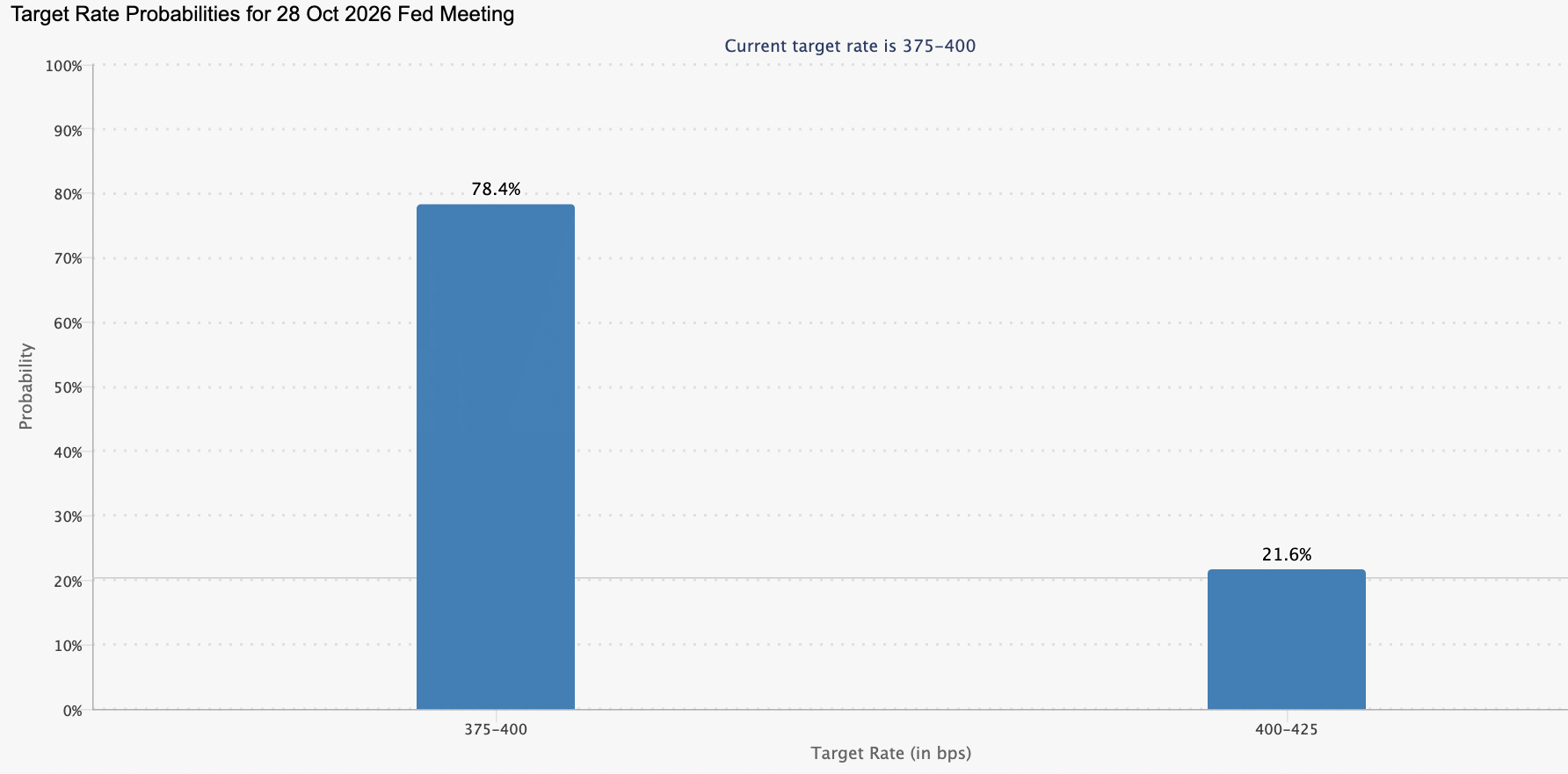
Target rate possibilities for Oct. 28 Fed Meeting. Source: FedWatch tool
Bitcoin Bottom Debate Returns as Saylor Sees $100,000 Again
The latest rebound has revived the debate over whether Bitcoin has already established a durable market bottom. Strategy Executive Chairman Michael Saylor believes the low is in, placing it slightly below $60,000 and arguing that Bitcoin could return above $100,000 as the next phase of the market develops.
Saylor's view is supported by Bitcoin's recovery from its lows and its ability to regain important technical levels. The rebound has taken the BTC/USD pair back toward $84,000 after the market briefly traded below its 200-week simple moving average (the purple wave in the chart below).
The price also closed the fourth consecutive week above its 50-week simple moving average (the yellow wave), confirming a long-term bullish trend-change.
Recovering a long-term trend measure can indicate that buyers are willing to defend lower prices, particularly when the move coincides with improving sentiment.
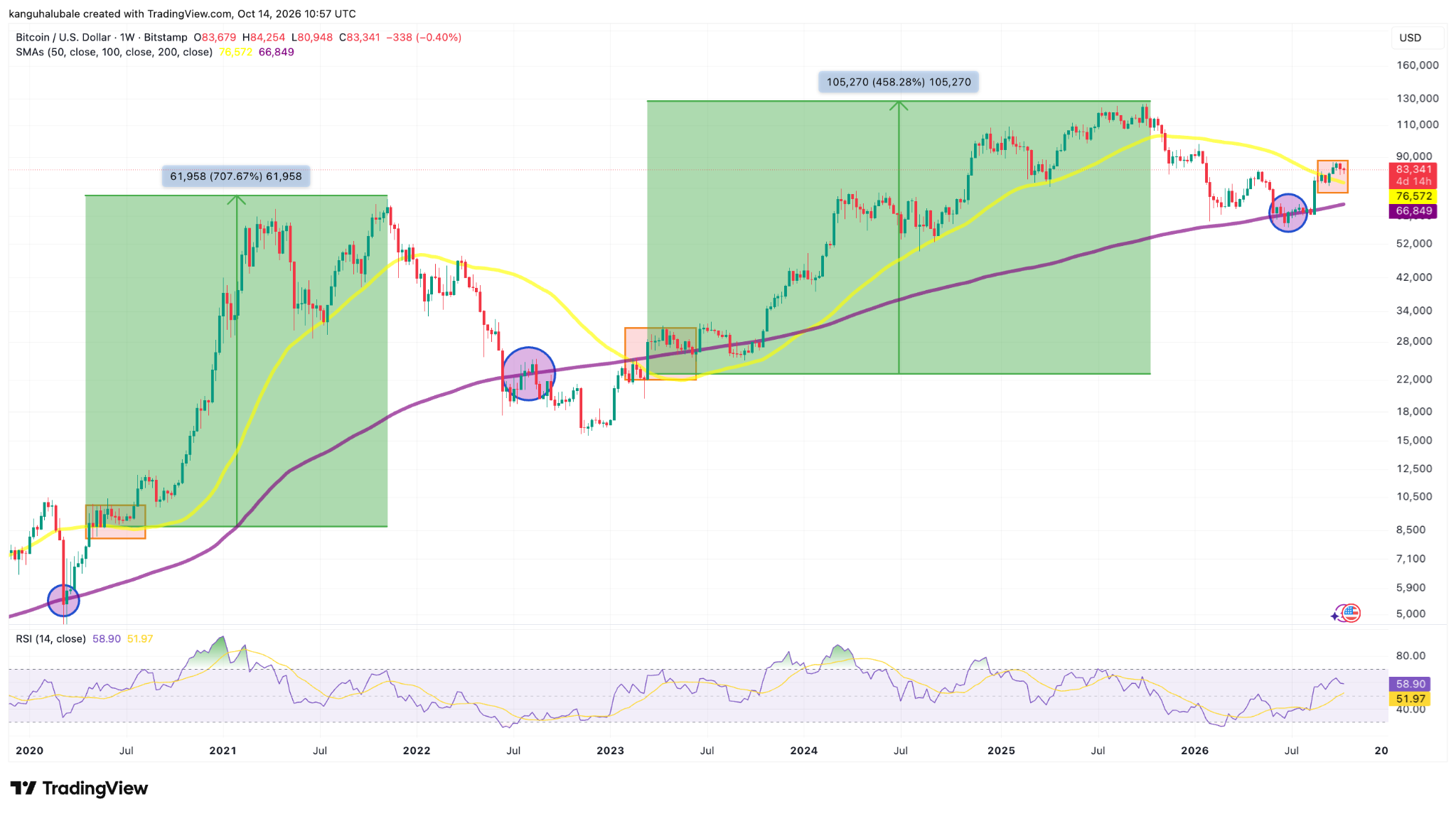
BTC/USD weekly chart. Source: TradingView
The last time this happened in 2020 and 2023, it marked the beginning of the subsequent bull runs, with the BTC price rising 707% and 458%, respectively, as shown in the chart above.
If a similar scenario plays out, continued trading above these two MAs could suggest that the bottom might be in for Bitcoin, with the price expected to return to six-figures over the next few weeks.
Bitcoin Volatility Compression Leaves the Breakout Direction Unclear
Bitcoin's latest price action is taking place against a backdrop of declining volatility. Analyst Axel Adler Jr. reports that the Bollinger Band width has narrowed to 4.9%, falling by more than half over the past week and reaching its lowest level since mid-September. His analysis also shows the Bitcoin Volatility & Flow Index remaining below its one-year average.
Bollinger Bands measure how far price moves from a rolling average. When the bands narrow, it indicates that recent price fluctuations have contracted. This compression can precede a larger move, but it does not independently indicate whether the next breakout will be higher or lower.
“The narrow bands show that price is confined to a tight range and the market has entered a compression phase,” Adler Jr. said, adding:
“If Bitcoin holds above $86.0K, it will signal an upward move. If Bitcoin holds below $81.9K, it will indicate a downward move.”
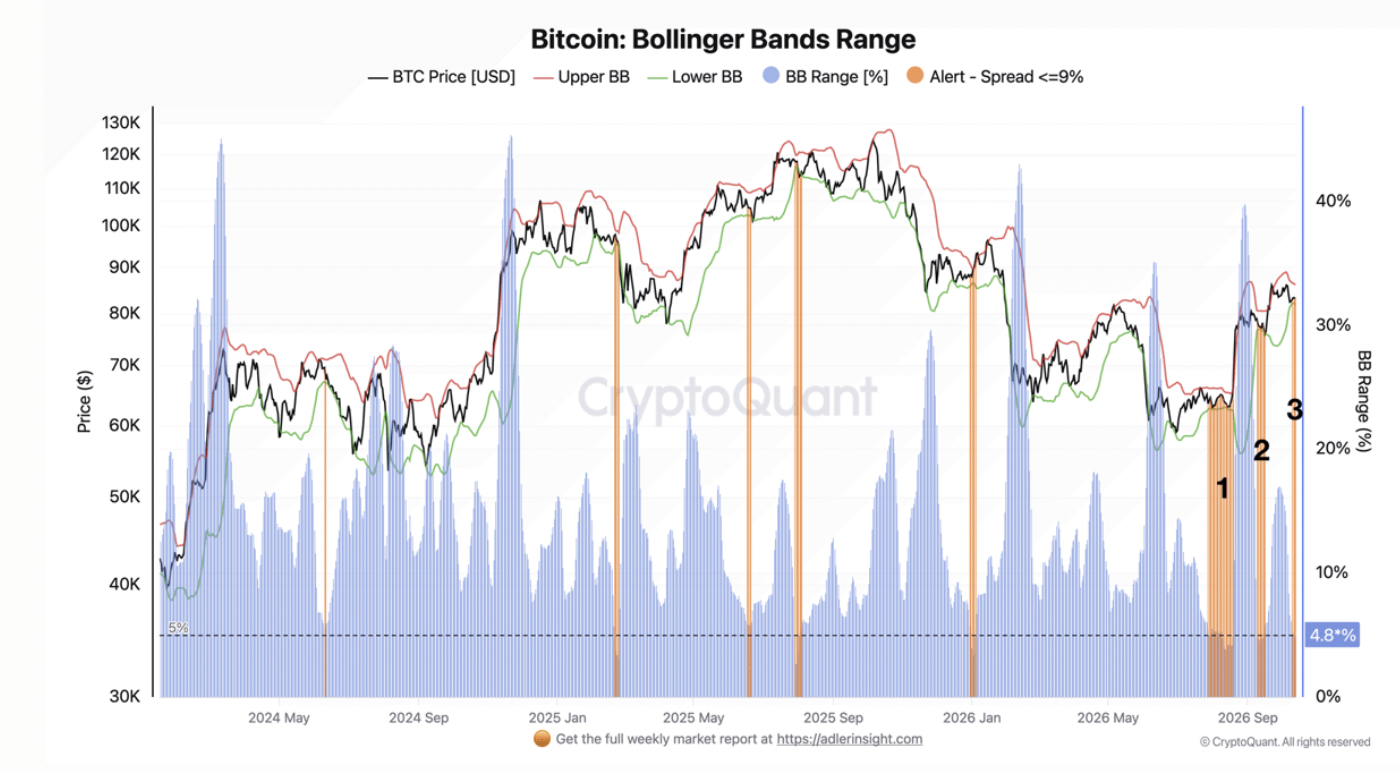
Bitcoin: Bollinger Bands Range. Source: CryptoQuant
The Volatility & Flow Index adds another dimension by assessing market conditions through volatility and flow. Its position below the annual average suggests that the current market has not yet demonstrated a decisive expansion in activity.
“A move back above the one-year average would indicate that activity is recovering, while a price breakout beyond either Bollinger Band would confirm the direction of the move,” the analyst added.
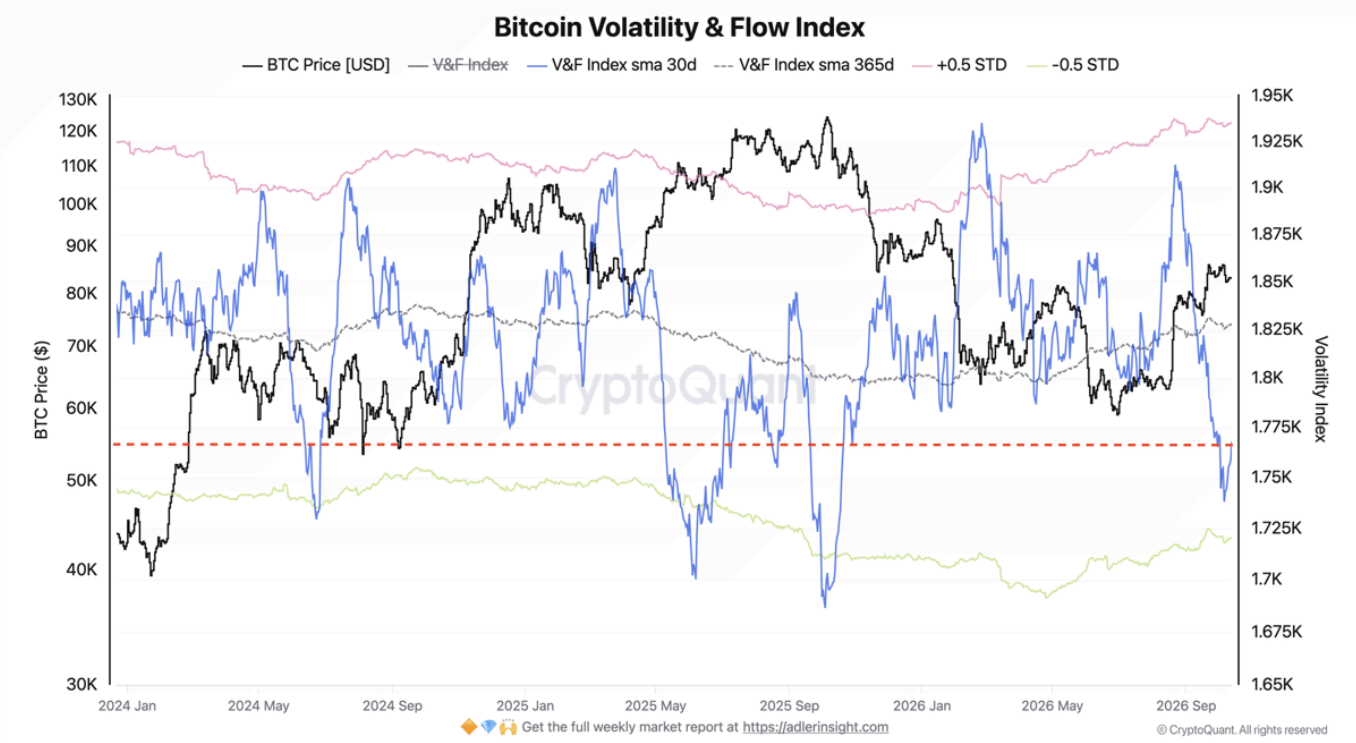
Bitcoin volatility and flow index. Source: CryptoQuant
For Bitcoin, a combination of these two volatility indicators points to a market waiting for a catalyst. CPI could provide that catalyst by shifting interest-rate expectations and changing demand for risk assets. A softer reading could help BTC challenge the recent highs near $85,000, while a hotter report could renew selling pressure and push price back toward support.
Key Takeaways: Bitcoin’s Recovery Still Depends on Inflation
Bitcoin's near-term outlook remains balanced between improving technical conditions and macroeconomic uncertainty. The rebound toward $84,000, Saylor's bottom thesis and the compression in Bollinger Band width all point to a market approaching a potentially decisive move. None, however, guarantees that the next expansion will be bullish.
The September CPI report is the immediate catalyst. If inflation comes in close to expectations or softer, the market could become more confident that the Fed will hold rates steady in October. That would reduce one source of pressure on Bitcoin and potentially support a retest of $85,000. A stronger reading could revive rate-hike concerns, strengthen the dollar and expose the recovery to renewed selling.
Technically, Bitcoin needs to sustain higher lows and break above nearby resistance with stronger momentum. The volatility-compression analysis suggests that a larger move may be approaching, but price direction still requires confirmation.
In my opinion, Bitcoin's recovery remains plausible, but the market has not yet established an unambiguous new uptrend. The coming sessions should reveal whether buyers can turn macroeconomic relief into sustained demand or whether inflation concerns keep the BTC/USD pair confined to its recent range.